By Jerry Deaton
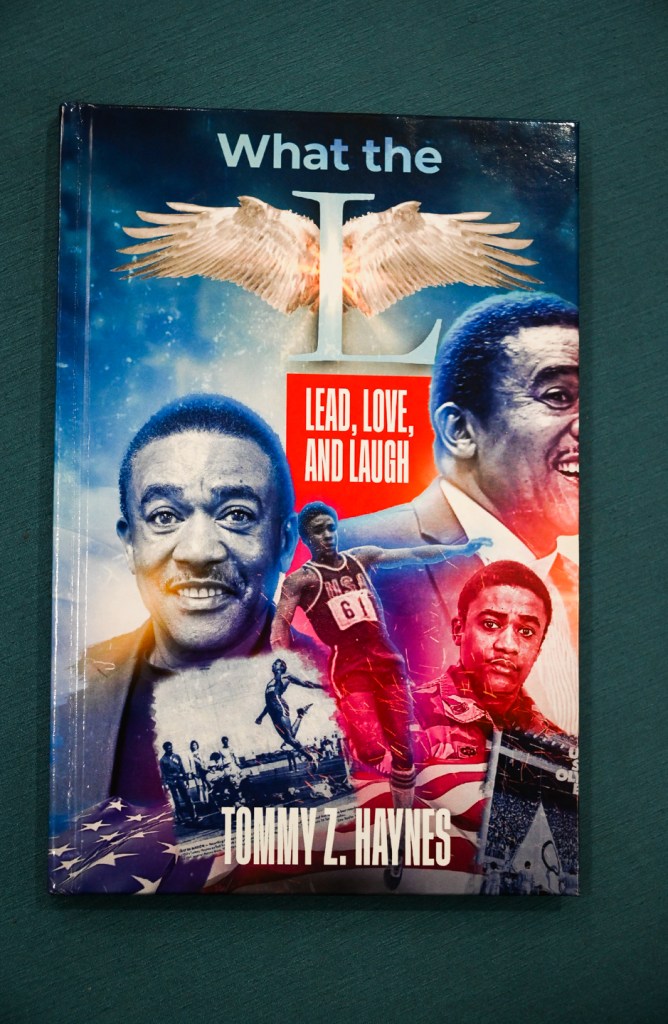
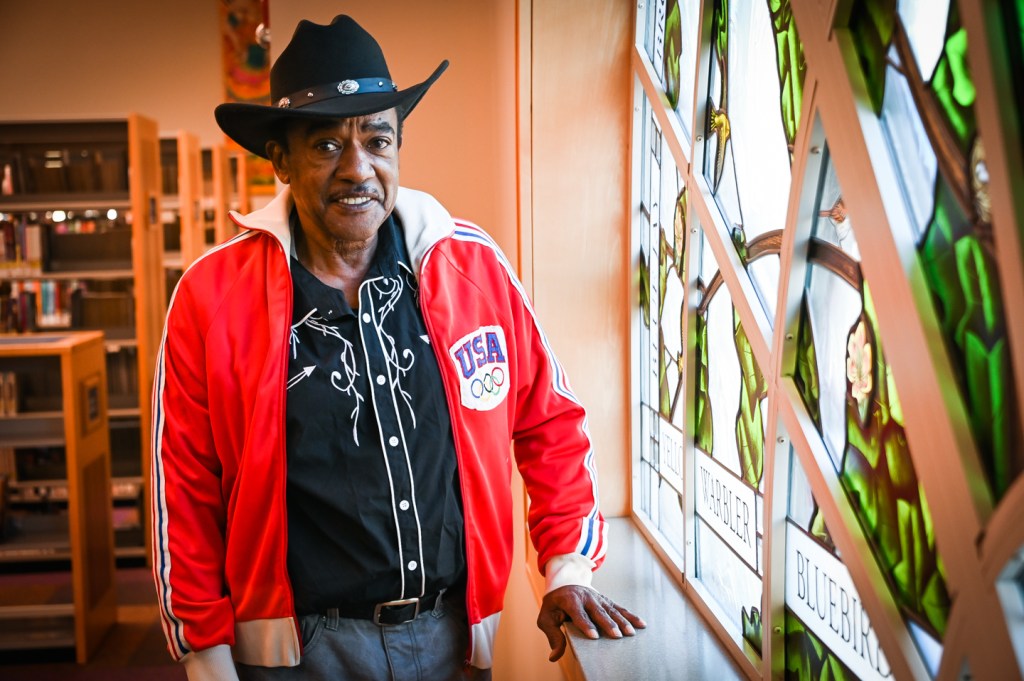
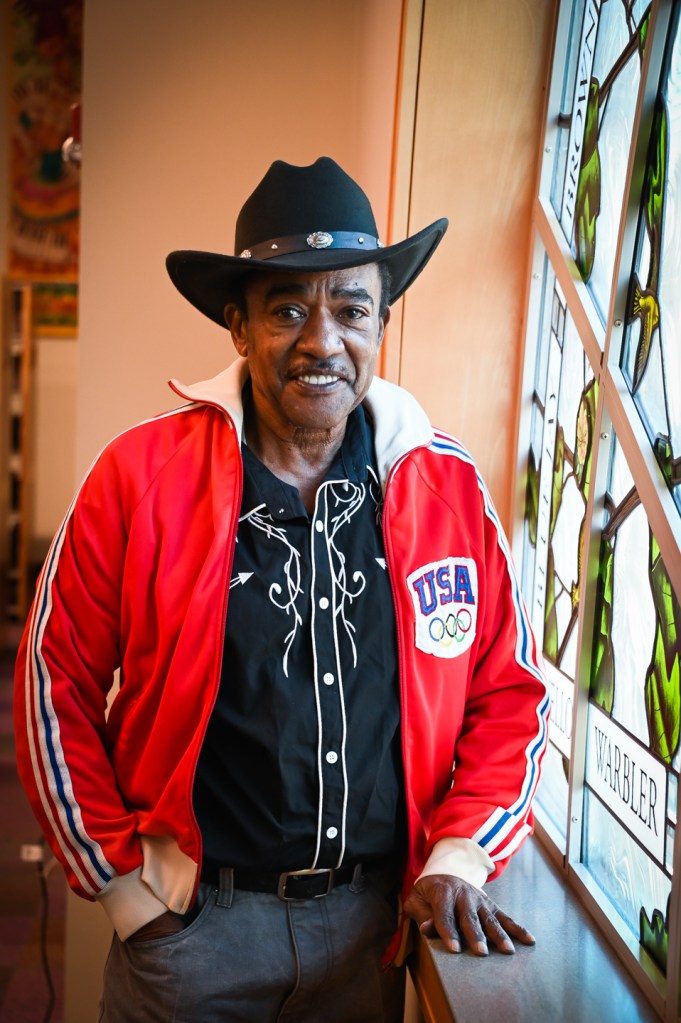
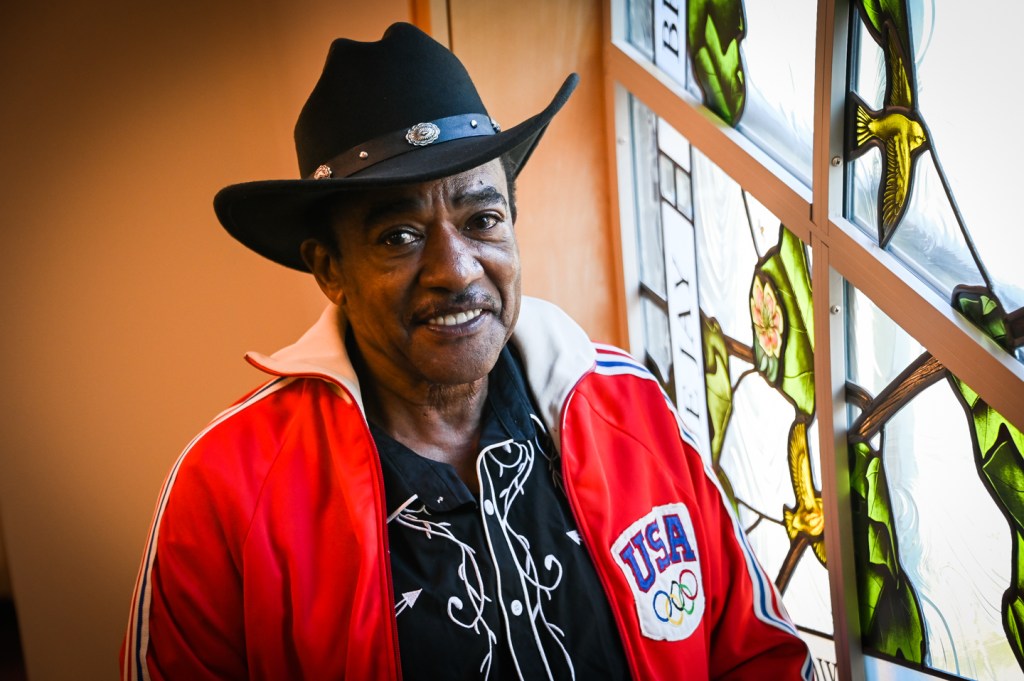
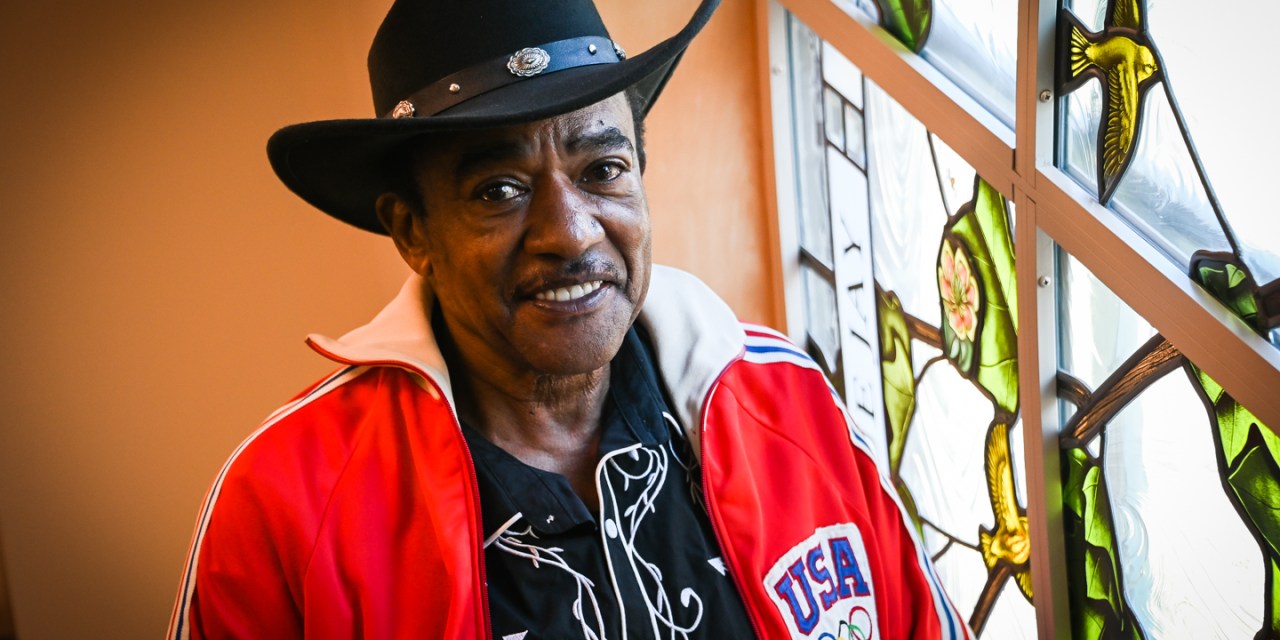
Until recently, if you asked me where Tommy Haynes was from and if he is a former Olympian, I would have said, “Well Tommy’s from Frankfort, born here. And Olympian? I don’t know about that!” But Tommy is from Nashville, Tennessee, and he rarely talks about his former successes, so I was surprised to learn that he indeed was an Olympian — and I’ve known this man for years.
I am impressed by solid, well-rounded people, and the more I get to know Tommy, it becomes abundantly clear that he is all that and much, much more. But he admits that it took some time to grow into the man that we now know. He is quick to tell you that as a boy, he was a bully and a tough guy. He isn’t proud of that fact, but it’s partly that toughness that helped turn his life around and serve as a guiding light for the future.
A good work ethic was always a part of his foundation, and one of my favorite stories involves his first job at a supermarket. The owner of the store sent a very young Tommy out one day to bring back some lunch for him and the staff. Keep in mind, this was 1965, and Tommy, admittedly naïve, went straight into the front of the diner and put in his order. The owners of the establishment immediately told him to go around back and wait. When he did, he encountered several other Black residents who laughed and kidded with him about what he had done. It was Tommy’s first real encounter with segregation, and it stuck with him.
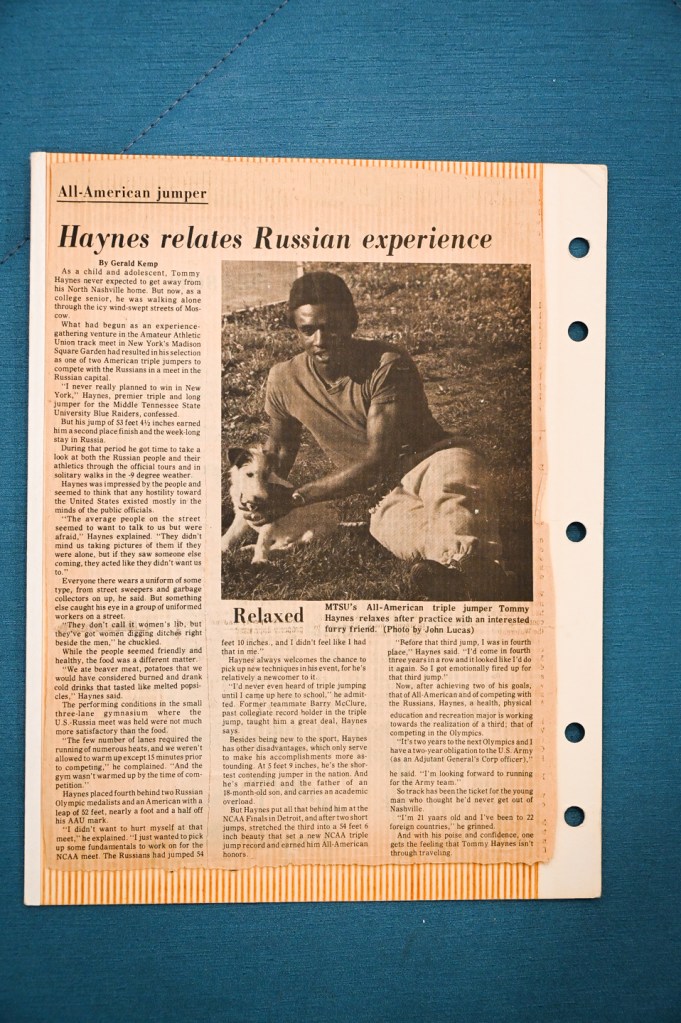
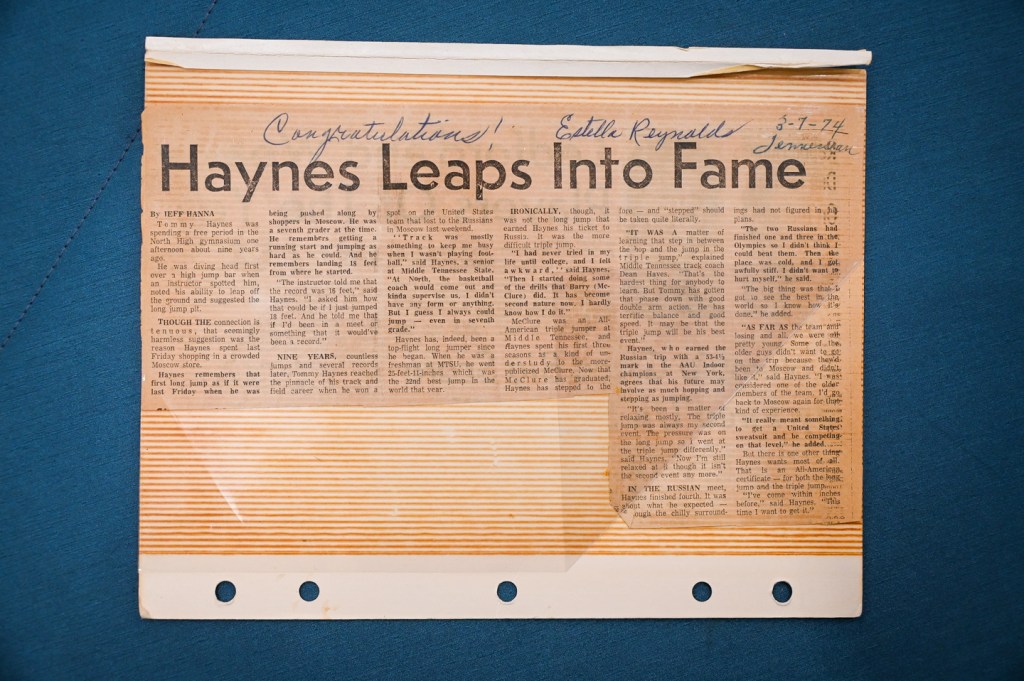
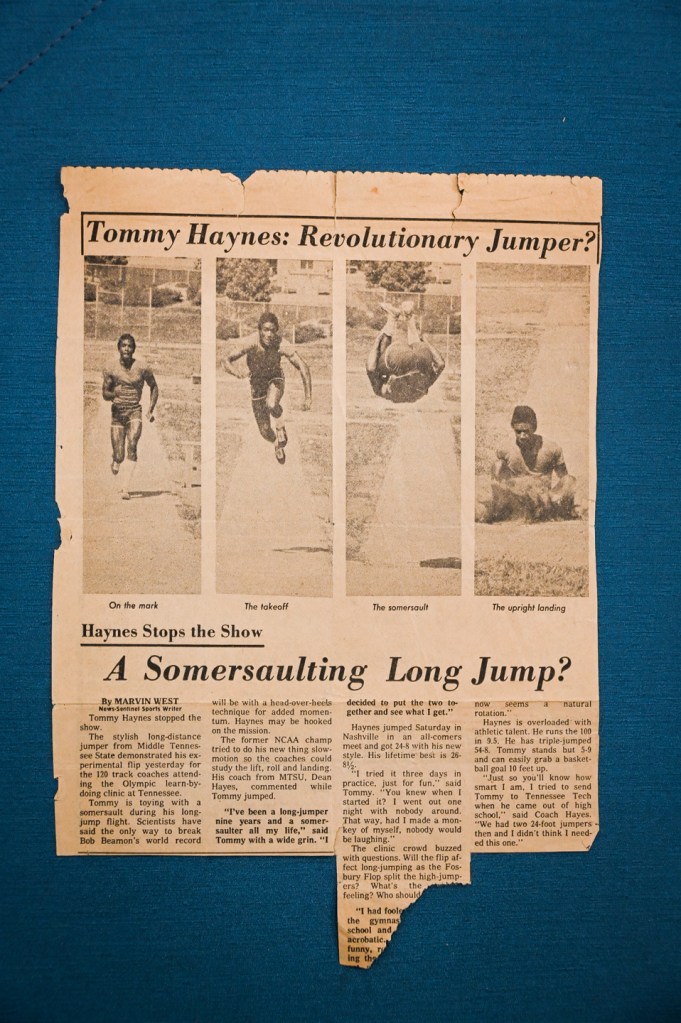
As he matured, Tommy discovered his athletic nature, but being only 5 feet, 9 inches, and of slight frame, he was not an immediate success. He attended Middle Tennessee State University (MTSU) as a non-scholarship track team member and wondered if he would be able to make ends meet and remain in school. But somewhere during his freshman year, Tommy came into his own and started turning heads with his performances.
At his first Mason Dixon Games, he broke the school record for freshmen with a long jump of just under 26 feet. From there his track career soared, though competing against men substantially taller. Later that season, Tommy’s coach moved him into the triple jump and Tommy readily took to this very strenuous form of competition.
In 1972, his sophomore year, would become one of the most pivotal of young Tommy Haynes’ life. While his track career was taking off, he met and fell in love with Marilyn Butler, a student at MTSU, who became the love of his life. Tommy was then invited to tour Africa as part of an athletic/religious missionary trip. This experience opened his eyes to conditions of many people on that continent and strengthened his already strong Christian religious convictions. His stories from this experience alone would fill this article, but the most interesting was when he left a bag on a plane in Tel Aviv, Israel, and when he went back to retrieve it, he was escorted back to the terminal by a tank!
When Tommy returned to MTSU for his junior year, he found himself a father-to-be and engaged to Marilyn. He also tore his ACL and none of these factors lent themselves to a career in athletics. But his resolve, backed by Marilyn’s total support, would prove things different, and at this point I have to emphasize just how important Marilyn was in Tommy’s life. From the outset, she saw the potential he had and was willing to make whatever sacrifice was necessary to help him along the way.
According to Tommy, “she never doubted me, but there was that one time that she sort of hit a wall. I was home from a world tour and had literally just gotten off the plane when I got another offer to travel. Marilyn got in my face and said, ‘You love track more than you love me!’ I understood where she was coming from and we sat down and worked through it, but other than that one moment, Marilyn was with me 100%. She was a very special person.”
Tommy and Marilyn married, and during his senior year, Tommy became a father and casually went on to break the collegiate triple jump record with a jump of 54 feet, 6.5 inches. He also made the decision to make the military his career, where his athleticism was further recognized.
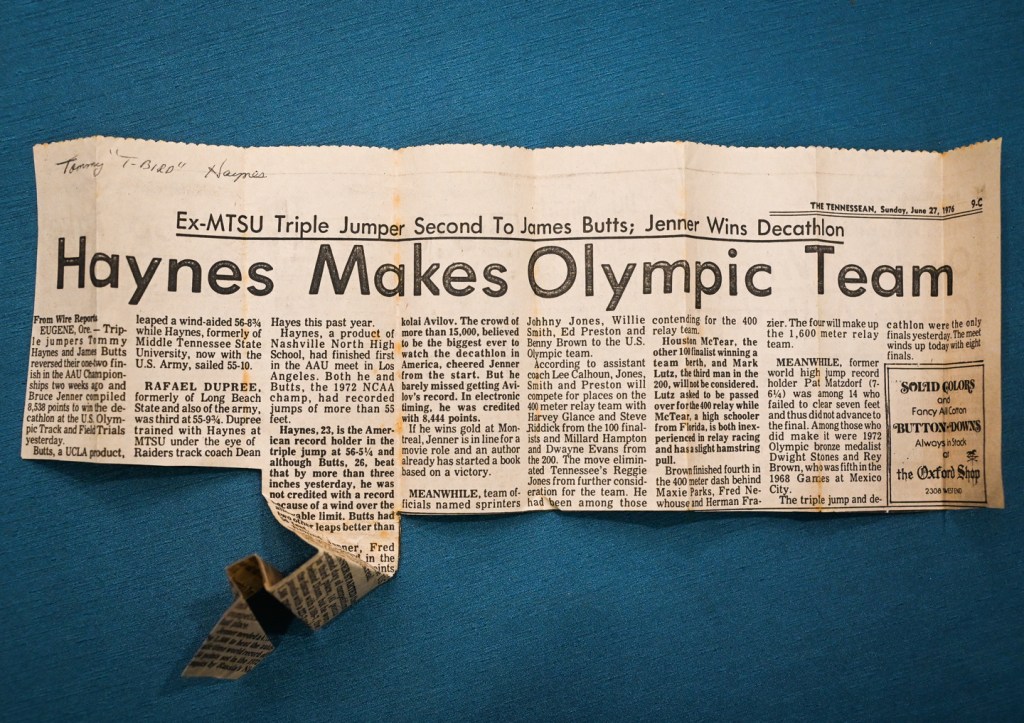
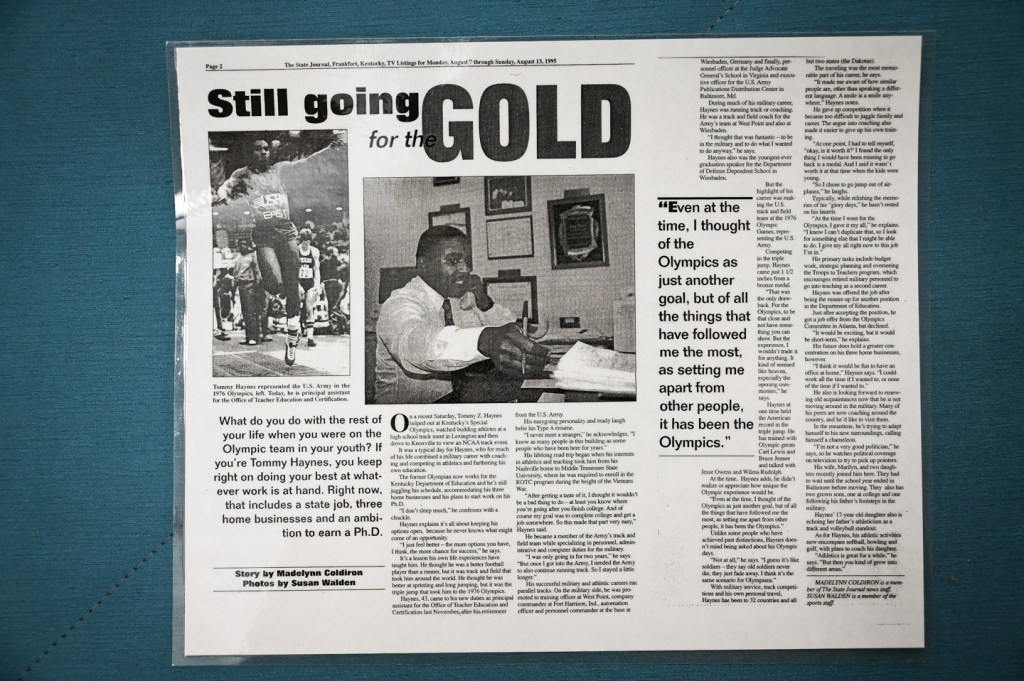
While in the Army, Tommy was given the opportunity to train for the Olympics and he chose his hometown university, MTSU as his base. He continued to train and improve under his old coach and eventually, when the time came to try for the U.S. Olympic Team in Oregon, it would be close. Tommy fouled on his first two attempts but rose to the occasion and ended up second overall on his third and final jump.
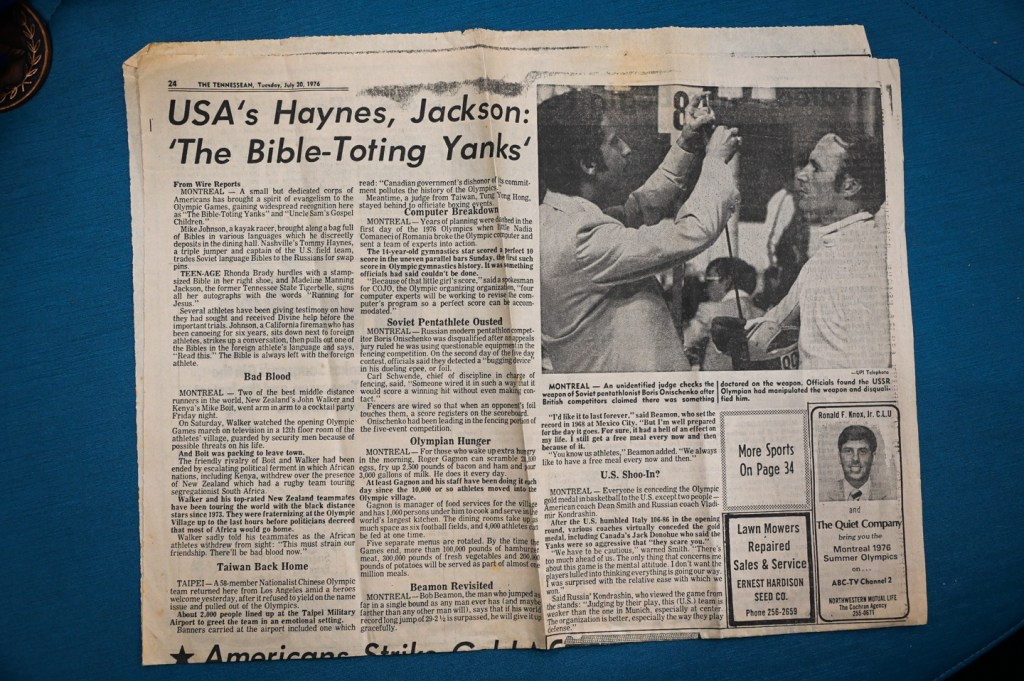
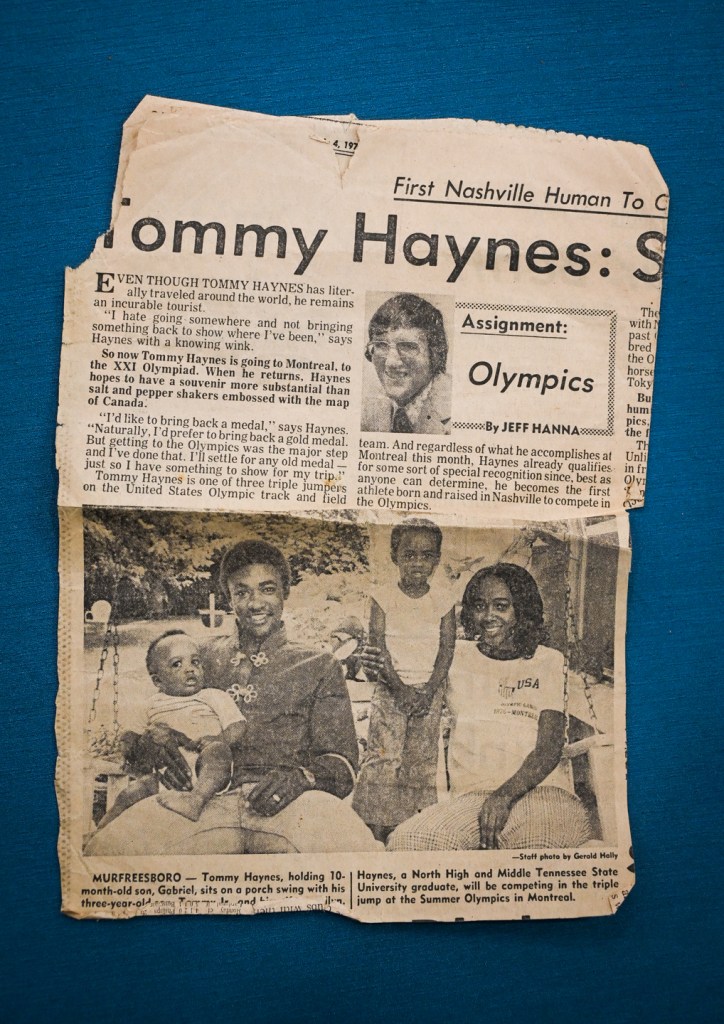
Tommy Haynes, the undersized, tough kid from Nashville, Tennessee, had distinguished himself as one of the finest athletes on the planet, and he was going to the 1976 Olympic Games in Montreal, Canada!
When we watch the Olympics, the opening ceremony is always a favorite moment for most of us. This was true for Tommy as well.
“I will never forget that moment, when we were all dressed in our opening ceremony uniforms, representing our country, but also in complete unison with the athletes and coaches from all of the other countries,” Tommy said. “It was the proudest, most amazing moment of my life!”
In the days leading up to his event, the triple jump, Tommy by his own admission was “very keyed up and nervous, but ready.” By coincidence, the legendary Wilma Rudolph asked to sit with him at lunch just days earlier and had given him some advice.
“Don’t pay attention to the other athletes, focus on your training,” Wilma told him.
Tommy was doing his best to follow that advice, but the pressure of seeing other athletes walking around with medals around their necks, and all of the high-profile people in reach of meeting and speaking to was intense. He remembers seeing Howard Cosell and thinking, “that’s one of the most famous people in the world, standing right there!”
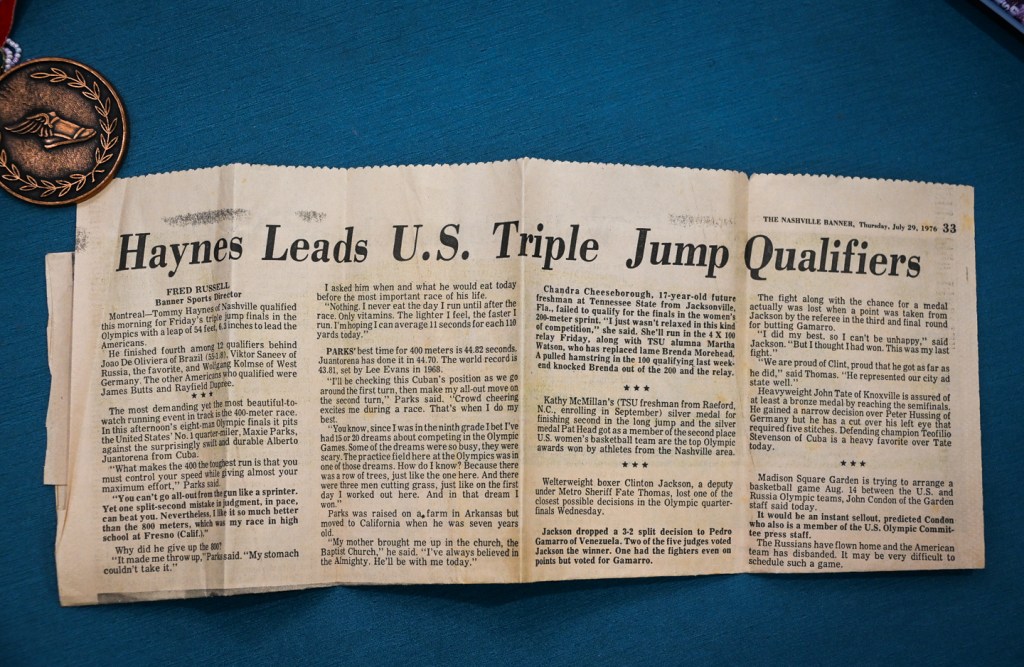
When the day finally came, Tommy made the top nine to advance to the finals, in spite of not getting his best jumps. His teammate, Rayfield Dupree, had also made the finals, but injured his back on his final jump and had to withdraw. Tommy felt obligated to gather Rayfield’s equipment and help look out for his teammate, and this may have been a factor in his performance that day.
“I felt responsible for Rayfield and admittedly I was a bit distracted,” he said.
Tommy would jump well that day but ended up missing a medal by just four inches. Now, after all that training and sacrifice, he would have to wait four more years for another shot. When I asked him how he felt, his answer was simple, quick and straight forth, “I felt a great disappointment, but I knew I had done my best that day, and it just didn’t work out.”
I had expected a different response, like, “It took me a full year to get my head straight, or I couldn’t eat for a week,” or something similar, but anyone that knows Tommy knows that is not his way.
“The Lord gave me the strength to get my knee and legs strong enough to keep my scholarship and to compete in the Olympics and I truly had a remarkable experience,” Tommy said. That is Tommy Haynes to the core.
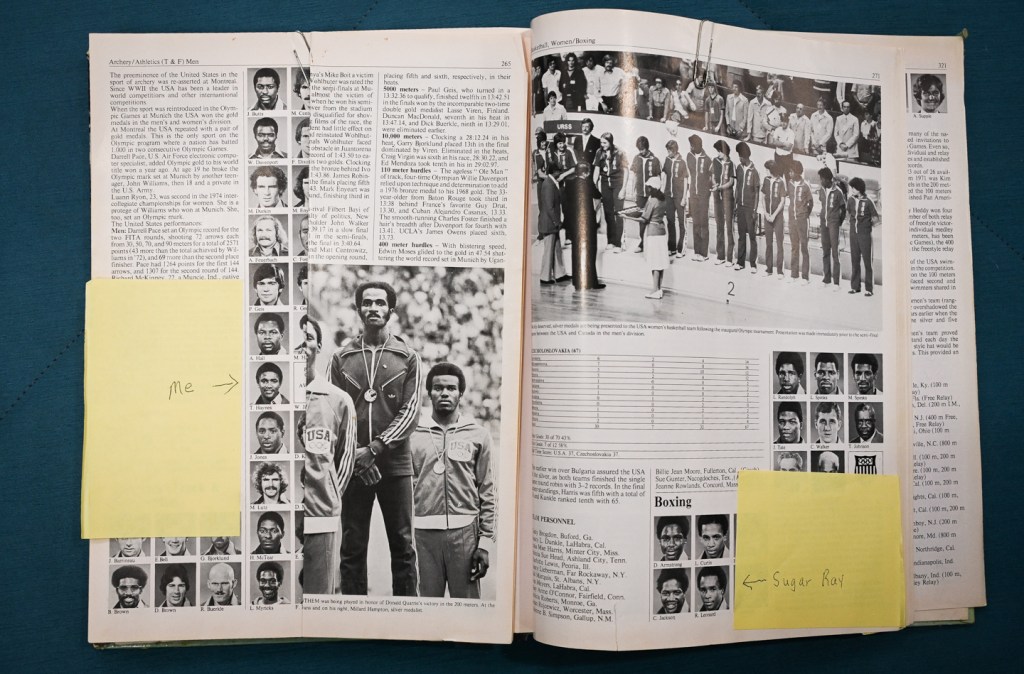
As an Olympian, Tommy was invited to the White House and on his way was “intercepted” by the Secret Service and escorted into the establishment as if he were a celebrity. Within minutes he discovered that they had mistaken him for Sugar Ray Leonard and saw the embarrassment on their faces. He offered to go get Sugar Ray because he knew him, but instead was kept where he was and, in his own words, treated like royalty.
This visit also allowed him to speak to a Russian competitor, Viktor Saneyev, who asked Tommy about his family and personal life.
As Tommy began to relay his story to his archrival, members of the KGB approached, and Tommy got his first glimpse of international politics when Viktor was immediately pulled away and removed from Tommy’s presence.
1976 would, however, prove to be Tommy’s last shot at Olympic gold. Four years later, the Games would be held in the Soviet Union, and the United States Olympic Committee would be one of the countries that voted to boycott the Olympics due to the Russian invasion of Afghanistan. Tommy was the athlete representative for the U.S. Army and though his heart was not in it, he knew his obligation was to his president and country, and voted to boycott.
Tommy now had two boys, Tommy Jr. and Omar, and was settled in his hometown in Tennessee. Out of nowhere he was asked to move to United States Military Academy at West Point and serve as track coach for the U.S. Army. While there, Tommy and Marilyn welcomed their first daughter, Delicia, and Tommy continued to train and compete. The awards and victories continued to pour in, and athletics ultimately took him to 32 countries.
After West Point, Tommy was a Company Commander, attended Airbourne School, took an assignment in Germany, and while there, delivered his second daughter, Carmen, in a Wiesbaden hospital when the doctor did not show up. It seemed that there was nothing Tommy could not rise to the occasion of. Tommy would finish his military assignment at the Pentagon where he was in quality management and would hone the skills that brought him to Frankfort.
Tommy’s main skills are leadership and the ability to problem solve, so when the time came to enter civilian life, he applied for several jobs in different states. Positions in Kentucky and Georgia interested him most, and while Tommy liked the other offers, according to him, “the Lord and I discussed this and the traffic in Atlanta was just too much so we chose Frankfort, Kentucky!”
His job here would be in helping to initiate the newly enacted Kentucky Education Reform Act, and he never even tried to explain what that entailed, because his job title was almost a paragraph long. Tommy would finish his career after 12 years as a deputy executive director.
It was clear that Frankfort was now his home. Today, his children are spread out but he is active in all their lives. He simply felt more at home here than even in Nashville, and his fit in Frankfort felt as natural as his hand holding Marilyn’s.
Tommy carries a cheerful outlook on life, even through adversity. In 2017, Marilyn was diagnosed with advanced ovarian cancer and would pass within a year. According to friends, Tommy was beside her right up to the end, and he is quick to say that she is one of the main reasons he was able to achieve so much in his life.
“She was the perfect partner for me, and I owe her so very much,” he said. “She was the love of my life.”
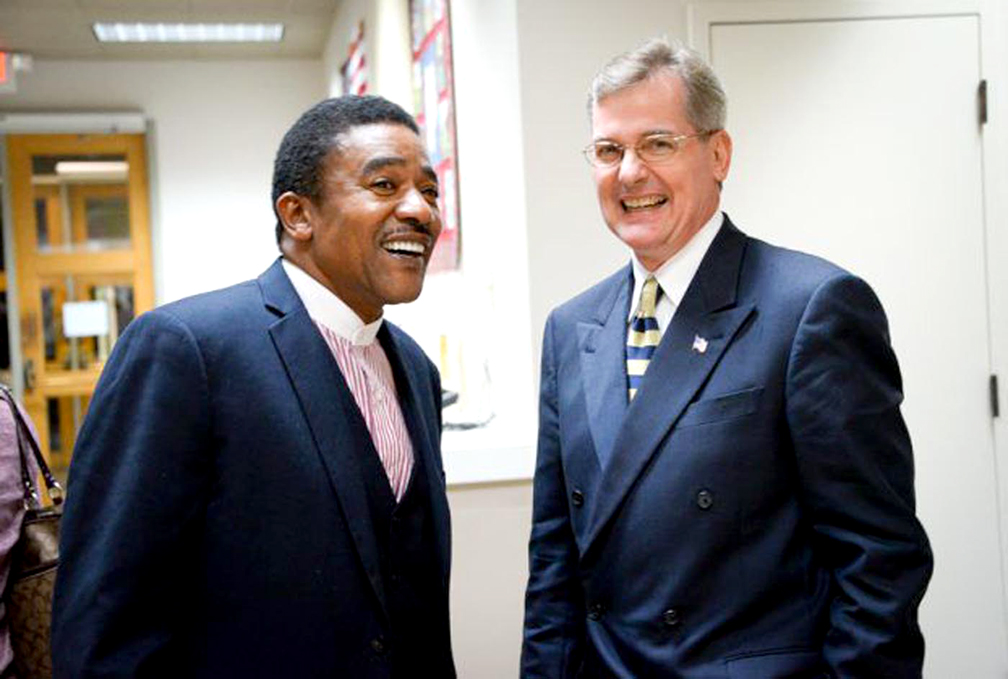
Politics would eventually catch Tommy’s attention, and he would go on to be a city commissioner and eventually vice mayor. In 2020, Tommy ran for mayor and was narrowly defeated, but has remained active in public life, serving on an endless number of boards, civic clubs and of course is devoted to his church.
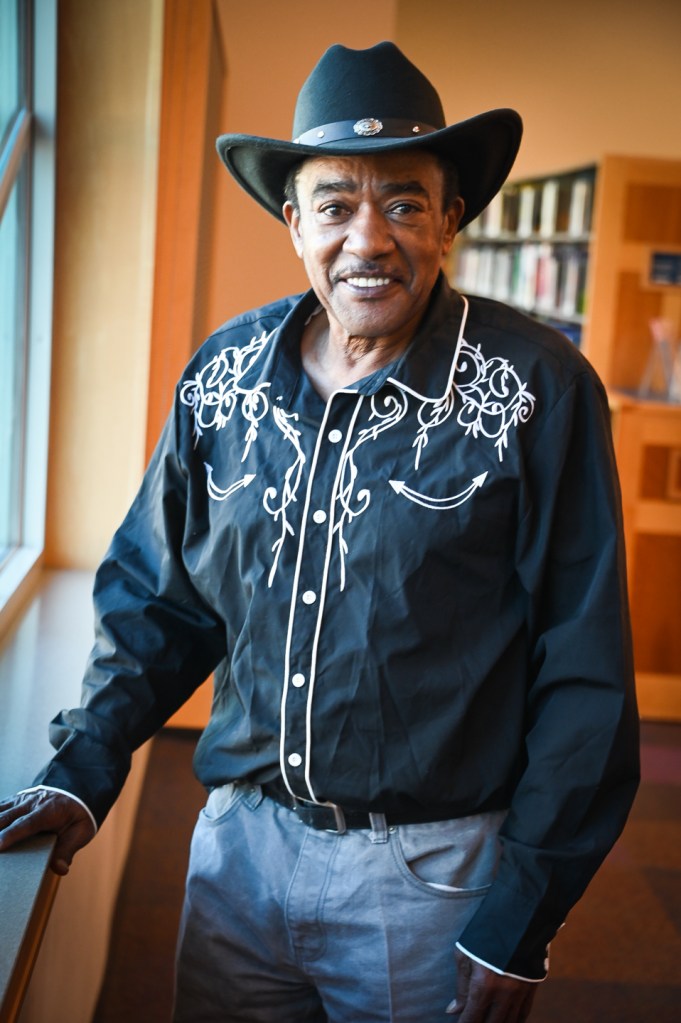
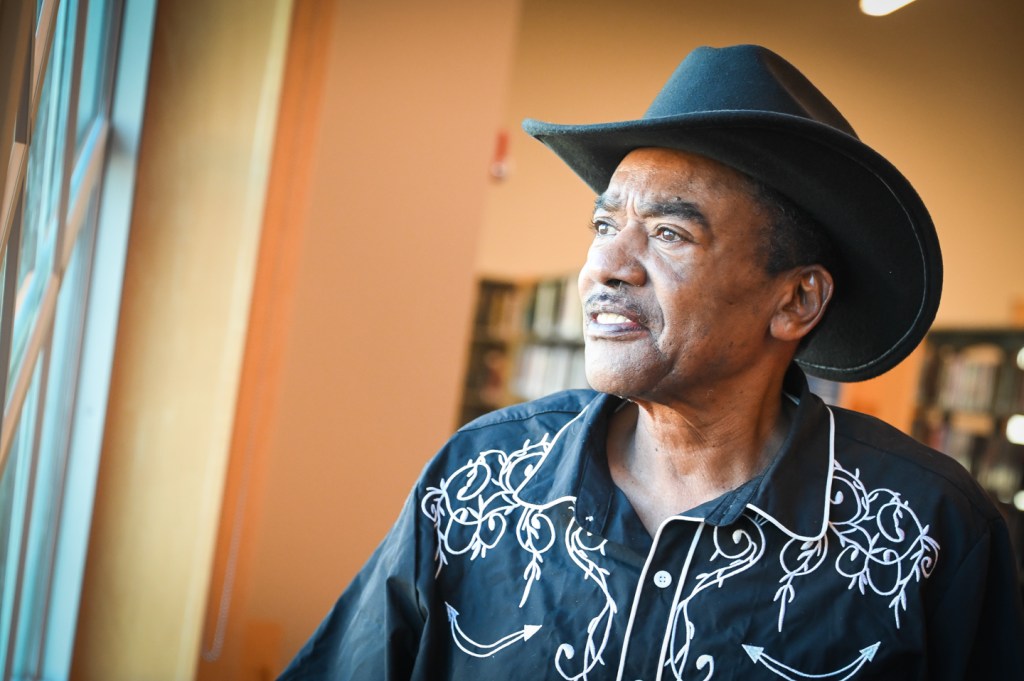
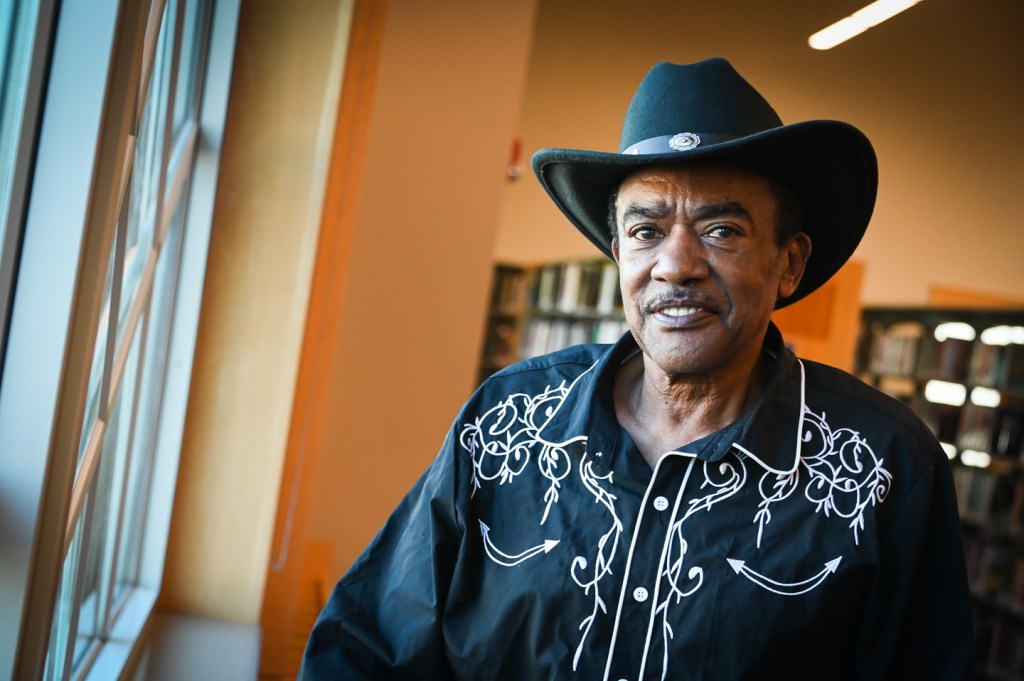
His past accomplishments, while extensive are not what he dwells on, and I’m not one bit surprised I did not know he was an Olympian. Instead, he prefers to live for the day. He is that person who always has a smile on his face, a kind word for everyone and a sincere offer to help.
Even if he had not been an Olympian, Tommy Haynes is the type of person who should be written about.